Your Tongue Knows More Than the Label Does: How to Read an Herb's Flavor for Potency
Walk into any Whole Foods or scroll through any wellness marketplace and you'll find rows of herbal products that taste like candy, smell like a spa, and cost somewhere between "reasonable splurge" and "I skipped a car payment for this." The packaging is beautiful. The branding is reassuring. The flavor is smooth, pleasant, inoffensive.
And for a lot of those products? That pleasantness is the problem.
Real herbal medicine is not supposed to taste like a fruit smoothie. It's not supposed to go down easy. If your adaptogen powder dissolves invisibly into your latte without changing the flavor at all, you should be asking some hard questions about what — if anything — is actually in it.
Your palate is one of the most underrated diagnostic tools in your wellness toolkit. Learning to use it is free, takes about thirty seconds, and will permanently change the way you shop for and use botanical remedies.
Why Taste Is a Pharmacological Signal, Not Just a Sensory Experience
This isn't about personal preference. The flavors in medicinal plants exist because of chemistry — specifically, because of the bioactive compounds that give herbs their therapeutic properties. Taste is essentially your body's first-pass analysis of what a plant contains.
Traditional herbalists across every culture understood this intuitively. Ayurvedic medicine built an entire classification system — the rasas, or six tastes — around the therapeutic implications of flavor. TCM uses taste as one of the primary ways to categorize herb functions and organ affinities. Western folk herbalists used the term "organoleptic assessment" — a fancy phrase for exactly what it sounds like: evaluating medicine through your senses.
When you taste an herb, you're not just registering flavor. You're detecting alkaloids, terpenes, tannins, glycosides, and resins — the actual molecules responsible for the herb's effects. No flavor means no molecules. No molecules means no medicine.
A Field Guide to What Each Flavor Is Telling You
Bitter: The Most Honest Flavor in Herbalism
Bitterness is the flavor most people try to avoid, and it's also the one you should be most relieved to encounter. Bitter compounds — including iridoids, alkaloids, and sesquiterpene lactones — are among the most pharmacologically active in the plant kingdom. They stimulate digestive secretions, support liver function, activate bile production, and modulate gut hormones that affect appetite and blood sugar.
Dandelion root, gentian, burdock, artichoke leaf, and andrographis are all genuinely bitter herbs. If your "detox" supplement contains dandelion and tastes like sweetened green tea, someone has either masked the active compounds with sweeteners or used such a minimal amount of plant material that the bitterness never had a chance to register.
When you taste a quality bitter tincture or tea, your mouth should respond — salivation increases, your stomach may rumble slightly, and you'll feel the flavor linger at the back of your throat. That's your digestive system waking up. That's the herb working.
Astringent: The Tissue Tightener
Astringency isn't exactly a taste — it's more of a sensation, that dry, puckering feeling you get from strong black tea, unripe persimmons, or a well-made yarrow infusion. It's caused by tannins binding to proteins in your mouth's mucous membranes.
Astringent herbs — witch hazel, raspberry leaf, oak bark, yarrow, rose — work primarily on tissue integrity. They tighten and tone mucous membranes, reduce inflammation in the gut lining, and support wound healing. If you're using an astringent herb for gut health or wound care and you're not getting that characteristic drying sensation, you're not getting the tannins, which means you're not getting the therapeutic action.
Pungent: Heat as a Delivery System
The spicy, warming, sometimes nose-clearing sensation of herbs like ginger, horseradish, turmeric, black pepper, and cayenne signals the presence of compounds like gingerols, piperine, and capsaicin. These are circulatory stimulants, anti-inflammatories, and bioavailability enhancers — piperine in black pepper, famously, increases curcumin absorption by up to 2,000 percent.
If your ginger supplement doesn't produce any warmth at all — not in your mouth, not in your chest, not in your stomach — it's a reasonable bet that either the gingerol content is negligible or the product has been so heavily processed that the volatile compounds have degraded. Fresh or high-quality dried ginger should feel alive in your body. You should know you took it.
Sweet and Mucilaginous: Nourishment and Coating
Herbs with natural sweetness — licorice root, marshmallow root, slippery elm, astragalus — often contain polysaccharides and saponins that provide nourishment, soothe irritated tissues, and support immune function. The thick, slightly slippery quality of a marshmallow root infusion isn't a texture quirk; it's the mucilage doing exactly what it's supposed to do, coating and calming inflamed mucous membranes in your throat and gut.
A marshmallow root tea that feels like plain water has lost its mucilaginous quality — likely due to poor extraction, wrong temperature (boiling destroys mucilage; cold infusion preserves it), or low-quality plant material.
How to Actually Test What You're Buying
You don't need a lab. Here's a practical sensory protocol for evaluating your herbs:
For tinctures: Put a few drops directly on your tongue before diluting. Hold them there for ten seconds. You should feel something — warmth, bitterness, astringency, a tingle. A tincture that tastes like plain alcohol with a faint herbal suggestion is telling you something.
For capsules: Open one and taste the powder. Yes, it's inconvenient. Yes, it's worth it. Turmeric powder should taste earthy and slightly bitter. Ashwagandha should have a distinctive horse-like, slightly bitter smell and taste (the name literally translates to "smell of horse" in Sanskrit). If it tastes like nothing, it's probably mostly filler.
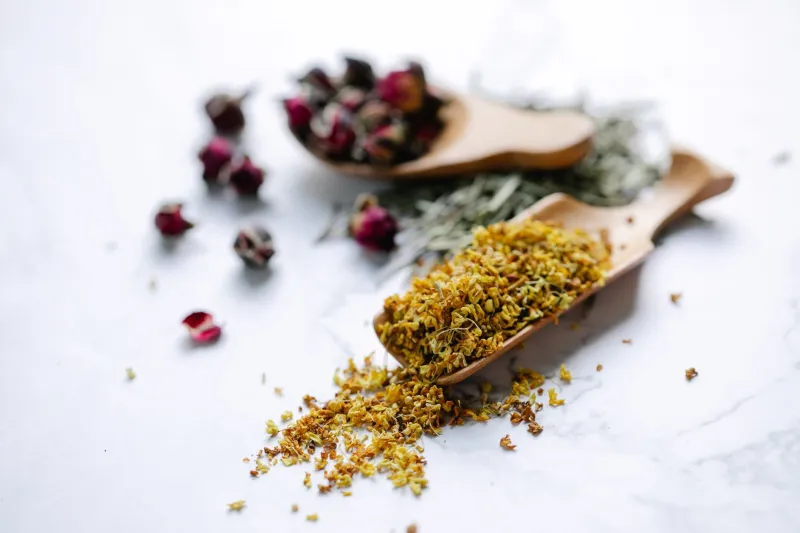
For teas and loose herbs: Smell before you brew. Medicinal herbs should have a strong, distinctive aroma — the volatile oils that create the smell are often the same compounds responsible for therapeutic action. Pale, odorless dried herbs are almost certainly old, improperly stored, or low-grade.
For extracts and powders: Color matters too. High-quality turmeric is deeply golden-orange. Quality spirulina is a dark, saturated blue-green. If your "superfood" powder looks pale and dusty, your eyes are agreeing with what your tongue is about to tell you.
The Pleasantness Trap
One more thing worth naming directly: the wellness industry has a financial incentive to make everything taste good. Products that taste good sell better. But the process of making an herb palatable — adding sweeteners, using heavy flavorings, relying on light-touch extracts — often works against the therapeutic purpose of the plant.
This doesn't mean good medicine can't also taste good. A well-made elderberry syrup, a properly blended adaptogen tonic, a beautiful tulsi and rose tea — these can be genuinely delicious and genuinely effective. But the flavor should come from the plants, not from covering the plants up.
Trust your tongue. It's been doing this work a lot longer than any supplement company has been in business.