What Every Culture Knew About Drinking That We Somehow Forgot
Let's be honest: hangovers are not a modern invention. People have been fermenting things and regretting it the next morning for thousands of years. And for most of that history, traditional healers weren't just handing out sympathy — they were handing out carefully prepared herbal formulas designed to help the body do what it does naturally, just faster and more effectively.
Somewhere along the way, that knowledge got quietly shelved. We traded it in for acetaminophen, greasy breakfast sandwiches, and the vague hope that enough coffee will make us functional again. None of those things actually address what's happening in your body. Traditional herbalism, it turns out, did a much better job of that.
What a Hangover Actually Is
Before we dig into the remedies, it helps to understand what's really going on physiologically. A hangover isn't just dehydration, though that's part of it. Alcohol metabolism produces a toxic byproduct called acetaldehyde, which is significantly more harmful than alcohol itself. Your liver works overtime to convert it into a less harmful compound, a process that depletes critical nutrients — particularly B vitamins, magnesium, and glutathione, your body's master antioxidant.
At the same time, alcohol disrupts your gut lining, triggers inflammation, throws off electrolyte balance, and irritates the stomach. That pounding headache, the nausea, the foggy brain — each of those symptoms has a specific biological cause. Traditional healers didn't have the vocabulary of biochemistry, but they observed the patterns. And they developed plant-based solutions that map, often remarkably precisely, onto what we now understand about hangover physiology.
Milk Thistle: The Liver's Ancient Ally
If there's one herb that belongs in every discussion of alcohol recovery, it's milk thistle (Silybum marianum). European healers — particularly in Mediterranean and Germanic traditions — had been using this spiky plant for liver complaints for over two thousand years. Roman naturalist Pliny the Elder wrote about it. Medieval herbalists prescribed it.
The active compound, silymarin, is a potent antioxidant that supports liver cell regeneration and helps protect hepatocytes from the oxidative stress caused by acetaldehyde. Modern research has confirmed these effects repeatedly. Yet somehow, when pharmaceutical companies began developing hangover products in the 20th century, milk thistle barely made the cut. It doesn't mask symptoms dramatically or quickly enough to be marketable as a quick fix. It actually supports the underlying process of recovery — which is slower, less flashy, and harder to patent.
For practical use: take milk thistle extract before a social occasion and again the following morning. Capsules are most convenient, but a strong tea made from crushed seeds works too.
Ginger and Peppermint: The Nausea Dream Team
Across Asia, the Middle East, and the Americas, ginger has been the go-to remedy for digestive distress for millennia. Ayurvedic practitioners in India used it specifically to calm the stomach after excess. Traditional Chinese medicine incorporated it into formulas for what we might today call alcohol-induced gastritis.
Ginger's active compounds — gingerols and shogaols — reduce nausea by acting on serotonin receptors in the gut and helping move things along through the digestive tract. Peppermint complements this beautifully, relaxing the smooth muscle of the gastrointestinal tract and easing that uncomfortable bloated, cramping feeling that often accompanies a rough morning after.
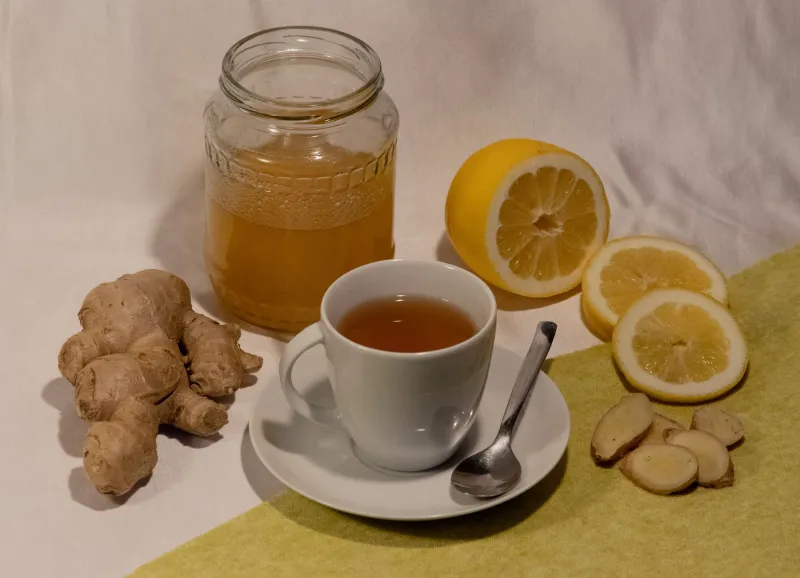
A simple ginger-peppermint tea, steeped for at least 10 minutes to get a strong extraction, is genuinely one of the most effective things you can sip on a difficult morning. Add a small amount of raw honey, which provides easily digestible sugars to help stabilize blood glucose — another factor that contributes to hangover misery.
Dandelion Root: The Electrolyte Restorer Nobody Talks About
Here's one that might surprise you. Dandelion root (Taraxacum officinale) has a long history in European and Native American herbalism as a gentle diuretic and liver tonic. But what makes it particularly interesting in the context of alcohol recovery is its mineral content.
Dandelion is naturally high in potassium — a key electrolyte that alcohol depletes through its diuretic effect. Traditional healers who used dandelion root tea for "morning complaints" after festivities were inadvertently doing something quite sophisticated: replenishing electrolytes while also supporting liver and kidney function simultaneously.
This is the kind of elegant, multi-action approach that traditional herbalism excels at. Modern hangover products tend to address one symptom at a time. Dandelion root tea does several things at once, quietly and effectively.
Turmeric: The Anti-Inflammatory Anchor
Ancient Indian and Southeast Asian healing traditions have long incorporated turmeric into post-celebration protocols. Curcumin, turmeric's primary active compound, is one of the most well-researched anti-inflammatory agents in the plant kingdom — and inflammation is a significant driver of hangover symptoms, particularly that full-body achiness and brain fog.
A traditional preparation worth trying: combine turmeric with black pepper (which dramatically increases curcumin absorption), a pinch of ginger, and warm coconut milk. This "golden milk" style preparation was used in Ayurvedic practice for recovery and restoration, and it holds up beautifully as a before-bed drink on a night when you've had a few.
A Simple Two-Part Protocol You Can Make at Home
The beauty of this traditional approach is that it's not reactive — it's both preventive and restorative. Here's a practical framework:
Before (the evening):
- Take a milk thistle supplement with dinner, or brew a strong milk thistle seed tea
- Eat a meal that includes healthy fats and complex carbohydrates to slow alcohol absorption
- Drink a cup of turmeric golden milk before bed with a large glass of water
The morning after:
- Brew a strong ginger-peppermint tea (1 teaspoon each of dried ginger and peppermint, steeped 10-12 minutes)
- Add raw honey and a squeeze of lemon for blood sugar support and vitamin C
- Follow with dandelion root tea to support kidney and liver function and replenish potassium
- Take another dose of milk thistle
None of these require a trip to a specialty store. Most can be sourced from a well-stocked natural grocery or kept in a home apothecary year-round.
Why Did We Abandon This?
The honest answer is that traditional remedies don't fit neatly into the pharmaceutical model. They work with the body rather than overriding it, they address root causes rather than symptoms, and they can't be patented. Milk thistle supporting your liver isn't as immediately satisfying as a painkiller taking the edge off your headache — even if it's doing something far more meaningful for your health.
There's also a cultural element. As industrialized medicine gained authority through the 20th century, folk and traditional practices were systematically deprioritized — often dismissed as superstition, even when the underlying mechanisms were sound. We're only now, through renewed ethnobotanical research and growing interest in integrative medicine, circling back to what traditional healers across dozens of cultures already understood.
Your ancestors didn't have a hangover cure because they were lucky. They had one because they paid close attention to how plants interact with the human body over centuries of careful observation. That knowledge didn't disappear — it just got buried. Time to dig it back up.