Patience Is the Active Ingredient: Setting Realistic Timelines for Your Herbal Remedies
We live in a culture that expects results yesterday. Pop a painkiller, feel better in forty minutes. Take a decongestant, breathe easier by the time your meeting starts. That kind of pharmacological speed has quietly rewired how we measure whether something is "working" — and it's become one of the biggest reasons people give up on herbal remedies way too soon.
Here's the thing: botanical medicine and pharmaceutical medicine are operating on completely different biological logics. That's not a flaw in herbal remedies. It's actually kind of the whole point.
Why Herbs Don't Work Like Drugs (And Why That's a Feature, Not a Bug)
Conventional medications are typically designed around a single isolated compound engineered to hit a specific receptor fast and hard. Herbs, on the other hand, contain dozens — sometimes hundreds — of naturally occurring compounds that interact with your body in layered, cumulative ways. They're not trying to override your system. They're trying to work with it.
That distinction matters enormously when it comes to timing. A pharmaceutical might suppress a symptom within an hour because it's essentially forcing a biological outcome. An herb like ashwagandha or milk thistle is doing something fundamentally different — it's nudging your body toward a state of better function over time, supporting processes that don't shift overnight.
This is why traditional herbalists across cultures — from Ayurvedic practitioners in India to Indigenous healers throughout the Americas — have always talked about herbal medicine in terms of seasons and cycles, not hours and days. Ancient wisdom built the timeline right into the practice. Modern wellness culture largely forgot that part.
The Fast-Acting Herbs: When You Should Feel Something Quickly
Not every herb is a slow burn. Some botanicals are legitimately designed by nature to act fast, and if you're not noticing anything within a short window, that's actually a useful signal.
Ginger for nausea, peppermint for tension headaches, valerian for acute sleep difficulty, and passionflower for situational anxiety can all produce noticeable effects within thirty minutes to a few hours. These herbs tend to work acutely — meaning they're best used in the moment, for immediate complaints.
Similarly, elderberry syrup taken at the very first sign of a cold can help shorten duration, but only if you catch it early and use it consistently for those first few days. Immune herbs like elderberry work best as rapid responders, not long-term maintenance tools.
If you're using these kinds of herbs and genuinely feeling nothing after two or three appropriate doses, that's worth noting. Either the preparation you're using isn't potent enough, or this particular herb may not be the right fit for your body chemistry. Not every plant works the same way for every person.
The Middle Ground: Two to Six Weeks
This is the zone where most people abandon ship — and where most herbal remedies are actually just getting started.
Herbs like lemon balm for chronic anxiety, holy basil (tulsi) for stress resilience, echinacea for immune modulation, and hawthorn for cardiovascular support typically need two to six weeks of consistent daily use before the full picture becomes clear. These aren't herbs you take once and evaluate. They're building something.
Think of it like physical therapy. You don't do three sessions and declare that stretching doesn't work. You commit to the protocol, track your baseline, and reassess after a meaningful stretch of time.
If you're in this category, keep a simple symptom journal. Note your energy, mood, sleep quality, and whatever specific complaint you're addressing — once in the morning, briefly. After four to six weeks, you'll have actual data instead of a vague feeling that "nothing changed."
The Long Game: Two to Six Months (and Sometimes Beyond)
Some of the most powerful herbs in traditional medicine require genuine patience — the kind that runs counter to pretty much every instinct modern life has trained into us.
Adaptogens like ashwagandha, rhodiola, and eleuthero are building your body's stress-response capacity over time. Research on ashwagandha, for example, typically shows meaningful results in cortisol reduction and fatigue improvement after eight to twelve weeks of consistent use. That's not a failure of the herb — that's the herb doing the slow, deep work of recalibrating a system that took years to get dysregulated.
Milk thistle for liver support, saw palmetto for prostate health, lions mane for cognitive function, and red clover for hormonal balance during menopause all fall into this longer timeline category. These herbs are working at the level of tissue, hormones, and cellular function. That kind of change doesn't happen in a week.
If you start an adaptogen routine expecting to feel dramatically different by day ten, you're setting yourself up for disappointment. The better question to ask yourself at the two-week mark isn't "Is this working?" — it's "Am I taking this consistently enough to even give it a chance?"
How to Tell the Difference: Needs More Time vs. Genuinely Wrong Fit
This is the nuanced part — and it's where a lot of people get stuck.
A remedy that needs more time will often show subtle early signals before the full effect kicks in. Maybe your sleep is slightly less fragmented. Maybe you're noticing you're recovering from stressful days a little faster. Maybe your digestion is just a touch more settled. These small shifts are worth paying attention to, because they're often the early indicators that something is actually happening.
A remedy that genuinely isn't right for you tends to show one of two things: either nothing at all — no shifts, no signals, even subtle ones — after a reasonable timeframe, or an actively uncomfortable response. Digestive upset, increased anxiety, skin reactions, or just a persistent sense that something feels off.
Your body communicates. The skill is learning to listen at a lower volume than we're used to.
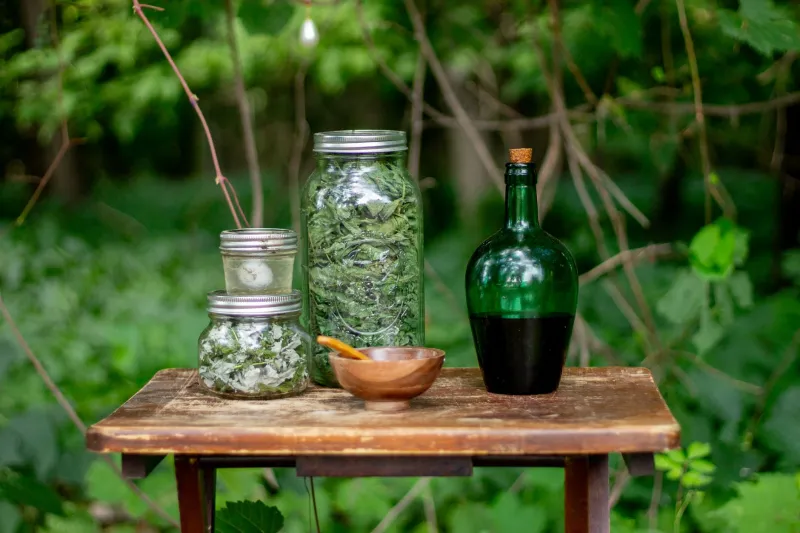
It's also worth considering how you're taking the herb. Teas are generally less concentrated than tinctures. Capsules vary wildly in quality and bioavailability. A low-quality supplement that's been sitting on a shelf for two years is not going to give you the same result as a high-quality, properly stored preparation. Before you decide an herb isn't working, make sure the preparation itself is up to the task.
When to Call It and Move On
Patience is a virtue, but it's not infinite — and herbal medicine isn't a substitute for professional care when something serious is going on.
If you've been consistent with a quality preparation for the full recommended timeline and you're genuinely seeing no movement, it's reasonable to reassess. Try a different form of the herb, consult a trained herbalist or integrative health practitioner, or consider whether the root issue might need a different approach entirely.
And if you're dealing with symptoms that are worsening, or anything that feels urgent — chest pain, sudden neurological changes, signs of infection — please don't wait on herbs. Get evaluated. Botanical medicine shines brightest in the space of prevention, chronic wellness, and gentle restoration. It has its limits, just like everything else.
The Bottom Line
Timeless herbal care — the kind that's been practiced across millennia and cultures — was never built around quick fixes. It was built around relationship: between you and your body, between your body and the plants, and between both of you and time.
Give your remedies the timeline they actually need. Track what you notice. Stay consistent. And when in doubt, ask yourself whether you're evaluating the herb — or just your patience.
Sometimes the most healing thing you can do is slow down long enough to let the medicine work.