What Your Pharmacist and Your Herbalist Both Wish You Knew: Navigating Herb-Drug Interactions Safely
The Conversation Nobody Is Having at Your Doctor's Office
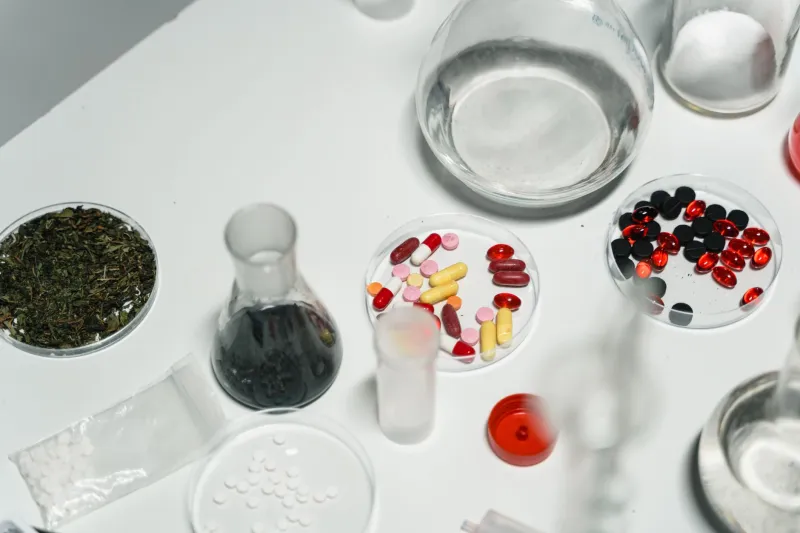
Here's a scenario that plays out in millions of American households every day: someone takes their prescribed medication in the morning, brews a cup of St. John's Wort tea in the afternoon, and never once connects the two. Why would they? Their doctor handles the prescriptions. The herbs feel like a separate, gentler category — more like food than medicine.
Except herbs are medicine. That's the whole point. And when two medicines occupy the same body, they interact. Sometimes beautifully. Sometimes not.
This isn't a scare piece designed to send you running back to the pharmacy. It's the honest, grounded conversation that most practitioners — on both sides of the conventional-alternative divide — never quite get around to having with you. Consider this your starting point.
Why Interactions Happen in the First Place
To understand why certain herbs and drugs clash, you need a quick introduction to a family of liver enzymes called the cytochrome P450 system — specifically CYP3A4 and CYP2D6. These enzymes are responsible for metabolizing a huge percentage of the pharmaceuticals people take daily, from antidepressants to blood thinners to birth control pills.
When an herb either inhibits or induces these enzymes, it changes how fast your body processes a medication. An herb that speeds up metabolism can cause a drug to clear your system before it has time to work. One that slows metabolism can cause the drug to accumulate to levels that become toxic.
Neither outcome is what you signed up for.
Add to this the fact that some herbs and drugs operate on overlapping biological pathways — affecting the same receptors, the same neurotransmitters, the same clotting factors — and you start to see why this topic deserves more than a shrug.
The Big Players: Herbs That Demand Attention
St. John's Wort is the most well-documented offender in the herb-drug interaction world, and it earns that reputation. This popular mood-supporting herb is a potent inducer of CYP3A4. The clinical consequence? It can significantly reduce blood levels of oral contraceptives (leading to unintended pregnancies), antiretroviral HIV medications, cyclosporine (used in organ transplant patients), certain chemotherapy drugs, and warfarin. The FDA has issued formal warnings about this. If you're on any of these medications, St. John's Wort is a firm no — full stop.
Ginkgo Biloba, beloved for cognitive support, has antiplatelet properties. That means it can thin the blood. Stack it with aspirin, ibuprofen, warfarin, or clopidogrel, and you're looking at a potentially serious bleeding risk. The same concern applies to high-dose garlic supplements and fish oil, though to varying degrees.
Valerian and Kava, both used for anxiety and sleep, can amplify the effects of central nervous system depressants — think benzodiazepines, sleep aids like zolpidem, and certain antihistamines. The combination doesn't just make you sleepier; it can suppress respiratory function in ways that are genuinely dangerous.
Echinacea, the go-to immune herb that half of America reaches for at the first sign of a cold, is generally considered safe for short-term use. But because it has mild immunomodulatory effects, people on immunosuppressant drugs — including those managing autoimmune conditions — should proceed cautiously and consult their prescriber.
Licorice Root (the real stuff, not the candy) can raise blood pressure and lower potassium levels when used in quantity. If you're managing hypertension or taking diuretics, this one warrants a conversation with your doctor before you add it to your rotation.
The Flip Side: Herbs That Genuinely Complement
Here's where the narrative gets more nuanced — and more hopeful. Not every herb-drug pairing is a cautionary tale. Some combinations are actively studied for their complementary potential.
Milk thistle (silymarin) is increasingly recognized for its ability to support liver health during pharmaceutical treatment. People undergoing chemotherapy, or those on long-term medications with known hepatotoxic effects, are among the populations where milk thistle has shown real promise in supporting liver enzyme levels. Research is ongoing, but the evidence base is growing.
Ginger has well-documented anti-nausea properties and is often used alongside chemotherapy protocols — sometimes even with oncologist approval — to manage treatment-related nausea. Its mild anti-inflammatory and digestive effects tend to complement rather than compete with most standard medications.
Probiotics and adaptogenic herbs like ashwagandha are showing up in integrative oncology and psychiatry settings with increasing frequency. The key in each case: the integration is supervised, the dosing is intentional, and the communication between patient and provider is open.
That last part is the whole ballgame.
How to Have the Conversation Your Doctor Might Not Start
Here's an uncomfortable truth: most physicians receive minimal training in botanical medicine. A 2017 survey found that the majority of US medical schools devote fewer than 10 hours total to complementary and alternative medicine education. Your doctor may not know about St. John's Wort and birth control. That's not their failure — it's a gap in the system. But it does mean the responsibility often falls to you.
A few practical steps:
Make a complete list. Before any medical appointment, write down everything you're taking — prescriptions, OTC medications, vitamins, and every herb or botanical supplement. Include doses and frequency. This list is your most powerful safety tool.
Use the word 'supplement.' When talking to your doctor or pharmacist, calling something a supplement — rather than just a tea or a natural product — signals that it's something they should factor into your care.
Ask your pharmacist directly. Pharmacists are genuinely underutilized in this area. They often have more granular knowledge about drug interactions than physicians do, and they're accessible without an appointment. Bring your herb list and ask for a quick interaction check.
Look up what you're taking. The Natural Medicines Database (naturalmedicines.therapeuticresearch.com) is the gold standard reference for herb-drug interactions. It's subscription-based, but many public libraries provide free access. It's worth the ten minutes.
Timing matters. In some cases, simply separating the timing of an herb and a medication by a few hours can reduce interaction risk. This isn't a universal fix, but it's a strategy worth discussing with your provider for lower-risk combinations.
The Both/And Approach to Your Health
At Timeless Herbal Care, we're not interested in the false choice between modern medicine and herbal wisdom. Both have earned their place. The ancient systems that developed these botanicals weren't working in opposition to healing — they were building toward it. So is modern pharmacology, at its best.
What we're advocating for is integration with eyes open. That means understanding that 'natural' doesn't mean 'inert.' It means recognizing that the herbs our ancestors used were potent enough to matter — which is exactly why they worked, and exactly why they deserve the same careful consideration as anything else you put in your body.
You can honor traditional herbal wisdom and take your blood pressure medication. You can support your mental health with adaptogens and work with a prescriber on a pharmaceutical protocol. These things are not mutually exclusive.
But they do require honesty — with your providers, and with yourself — about everything that's in your cabinet.
That conversation? It starts here.