From Frazzled to Balanced: The Ancient Herbs Quietly Revolutionizing Women's Hormonal Health

Photo: woman holding herbal supplements adaptogen herbs wellness calm natural light, via bodyboosters.net
Somewhere between a demanding career, a packed family calendar, and the slow creep of midlife, a lot of American women are hitting a wall. Sleep goes sideways. Moods swing without warning. The cycle that was once predictable starts doing its own thing. And when they bring it up at a doctor's appointment, the answer is often a prescription — sometimes the pill, sometimes an antidepressant, sometimes both.
But a growing number of women are pausing before they fill that prescription. They're asking a different question: What did women do before any of this existed?
The answer, it turns out, is pretty well-documented. They used plants.
The Modern Hormonal Crisis Is Real — and It's Getting Worse
Before we dive into the botanicals, let's be clear about what we're actually dealing with. Hormonal imbalance isn't a vague, catch-all complaint. It's a measurable, physiological reality that affects a staggering number of women. According to research published in the journal Frontiers in Endocrinology, chronic stress is one of the most significant disruptors of the hypothalamic-pituitary-adrenal (HPA) axis — the command center that regulates cortisol, estrogen, progesterone, and thyroid hormones alike.
When stress becomes chronic, as it so often does in modern American life, that axis gets stuck in overdrive. Cortisol stays elevated. Progesterone production drops. Estrogen dominance can creep in. The result? A cascade of symptoms that range from annoying to genuinely debilitating: irregular periods, stubborn weight gain, brain fog, anxiety, insomnia, and the kind of exhaustion that no amount of coffee fixes.
This is precisely the terrain where traditional herbal medicine has operated for thousands of years — and where modern herbalism is now finding its footing again.
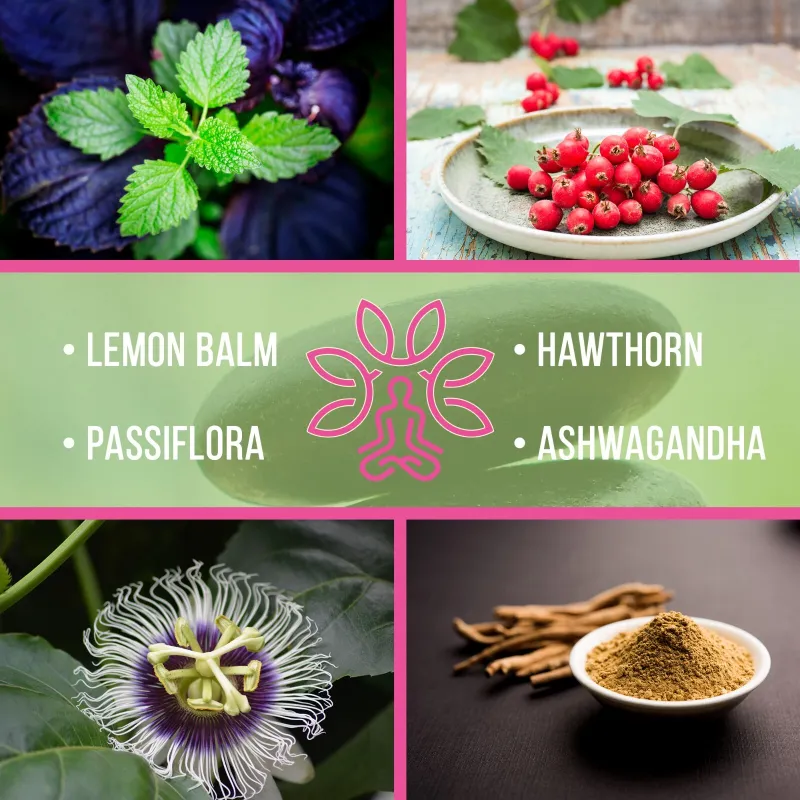
Ashwagandha: The Stress-Hormone Equalizer
If you've spent any time in wellness circles, you've probably heard of ashwagandha (Withania somnifera). It's an Ayurvedic staple that's been used in India for over 3,000 years, and it's now one of the most researched adaptogens on the market.
What makes it relevant to hormonal health specifically? Its relationship with cortisol. A well-cited double-blind study published in Medicine (2019) found that participants taking a standardized ashwagandha root extract experienced a significant reduction in serum cortisol levels alongside measurable improvements in stress, anxiety, and sleep quality.
For women, that cortisol reduction has downstream effects. Lower chronic stress means the body doesn't have to rob progesterone to produce cortisol — a process sometimes called "pregnenolone steal." In practical terms, that can mean more regular cycles, less PMS, and better sleep in the luteal phase.
A good starting point is 300–600mg of a standardized root extract daily, ideally taken with food. Give it at least six to eight weeks before evaluating results — adaptogens are slow burners, not quick fixes.
Vitex: The Cycle Whisperer
Vitex (Vitex agnus-castus), also called chaste tree berry, has a reputation in traditional European herbalism that spans centuries. Midwives and healers used it to regulate menstrual cycles, ease PMS, and support fertility. Modern research is beginning to explain why.
Vitex doesn't contain hormones itself. Instead, it acts on the pituitary gland, influencing the release of luteinizing hormone (LH) and indirectly supporting progesterone production in the second half of the menstrual cycle. A systematic review in Phytomedicine found that vitex was significantly more effective than placebo in reducing PMS symptoms — including breast tenderness, irritability, and bloating — across multiple randomized controlled trials.
It's also showing promise for women with irregular cycles and those transitioning into perimenopause, where progesterone levels begin their gradual decline years before the final period.
One important note: vitex is a slow-acting herb. Most practitioners recommend using it consistently for three to six months before expecting significant cycle changes. It's also not recommended for women currently on hormonal birth control or hormone replacement therapy without consulting a qualified practitioner.
Black Cohosh: Perimenopause's Most Studied Ally
Black cohosh (Actaea racemosa) is a North American native — a fact that feels fitting given how central it has become to conversations about women's health on this continent. Indigenous communities used it long before European settlers arrived, and today it's one of the most commercially sold herbal supplements in the US.
Its primary application is menopausal symptom relief, particularly hot flashes and night sweats. The North American Menopause Society has acknowledged that black cohosh may be a reasonable option for women seeking non-hormonal alternatives for vasomotor symptoms. Multiple clinical studies support its use, though researchers are still debating its exact mechanism — it doesn't appear to act directly on estrogen receptors, which makes it a safer option for women who've had estrogen-sensitive cancers.
For women in their late 30s and 40s noticing the early signs of perimenopause — erratic cycles, worsening PMS, disrupted sleep, mood shifts — black cohosh can be a gentler entry point than pharmaceutical hormone therapy.
Building a Practical Protocol
Here's where a lot of herbal wellness content falls short: it lists the plants without telling you how to actually use them together in a way that makes sense for your life. So let's get practical.
For cycle irregularity and PMS: Vitex is your anchor herb. Take it consistently in the morning (it's traditionally taken in the morning to align with natural hormonal rhythms). Support it with ashwagandha in the evening to bring cortisol down before bed. Add magnesium glycinate — not an herb, but a critical mineral for progesterone function — and you've got a solid foundation.
For perimenopause transitions: Black cohosh handles the acute symptoms like hot flashes. Ashwagandha supports the adrenals, which take over a larger share of hormone production as the ovaries wind down. Maca root (Lepidium meyenii), another adaptogen with a strong traditional history in Peru, is worth adding for energy and libido support during this phase.
For chronic stress that's wrecking your cycle: Start with ashwagandha and don't add anything else for the first month. Assess. Then layer in vitex if cycle irregularity persists. Address sleep, blood sugar stability, and caffeine intake alongside the herbs — no plant can fully compensate for a lifestyle that's constantly triggering the stress response.
A Word on Quality and Safety
The US supplement market is largely unregulated, which means quality varies wildly. Look for products that use standardized extracts, have third-party testing (NSF, USP, or Informed Sport certifications are good signs), and disclose their sourcing. Brands that grow or source organically and transparently are worth the premium.
And please — talk to your healthcare provider before starting any new herbal protocol, especially if you're on medications, pregnant, breastfeeding, or managing a diagnosed hormonal condition. Herbs are powerful. That's the whole point. Which also means they deserve the same respect you'd give any active compound.
Ancient Wisdom, Modern Bodies
There's something quietly radical about a woman in 2024 reaching for a bottle of vitex instead of reflexively accepting a prescription she's not sure she wants. It's not anti-medicine. It's pro-agency. It's the recognition that the body has its own intelligence, and that plants have been working with that intelligence for a very, very long time.
The herbs covered here aren't fringe remedies. They're backed by centuries of traditional use and a growing body of peer-reviewed research. They're also, increasingly, what women are asking for — proof that the conversation around hormonal health is finally starting to expand beyond a one-size-fits-all pharmaceutical model.
Your hormones have a story. These plants have been helping women tell it for generations.